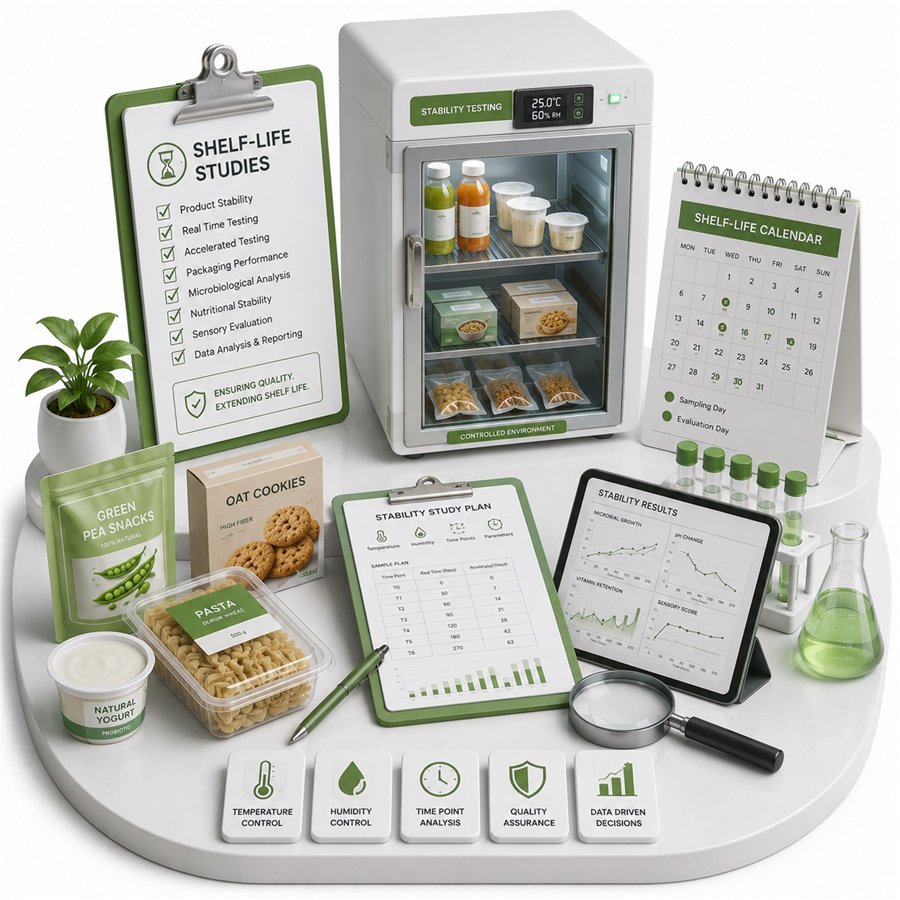
A shelf-life claim is a promise about safety and quality over time. A proper study is how you earn the right to make it.
Shelf life is governed by microbial growth, chemical and enzymatic change, and physical deterioration — all shaped by water activity, pH, formulation, packaging and storage temperature. Understanding the limiting factor for your product focuses the study.
Define the failure criteria (safety and quality), storage conditions, sampling points and tests up front. Real-time studies at intended storage conditions are the gold standard; accelerated studies can indicate direction but need careful interpretation.
Combine microbiological, sensory, chemical and physical measures. A product can be microbiologically safe yet fail on texture, colour or flavour long before — or after — the safety limit.
Set the shelf life with a margin below the first point of failure, document the rationale, and revalidate when formulation, process or packaging changes. Coordinate laboratory testing through a qualified partner.
Request a consultation for a practical, prioritised plan tailored to your operation.
Request a Consultation